

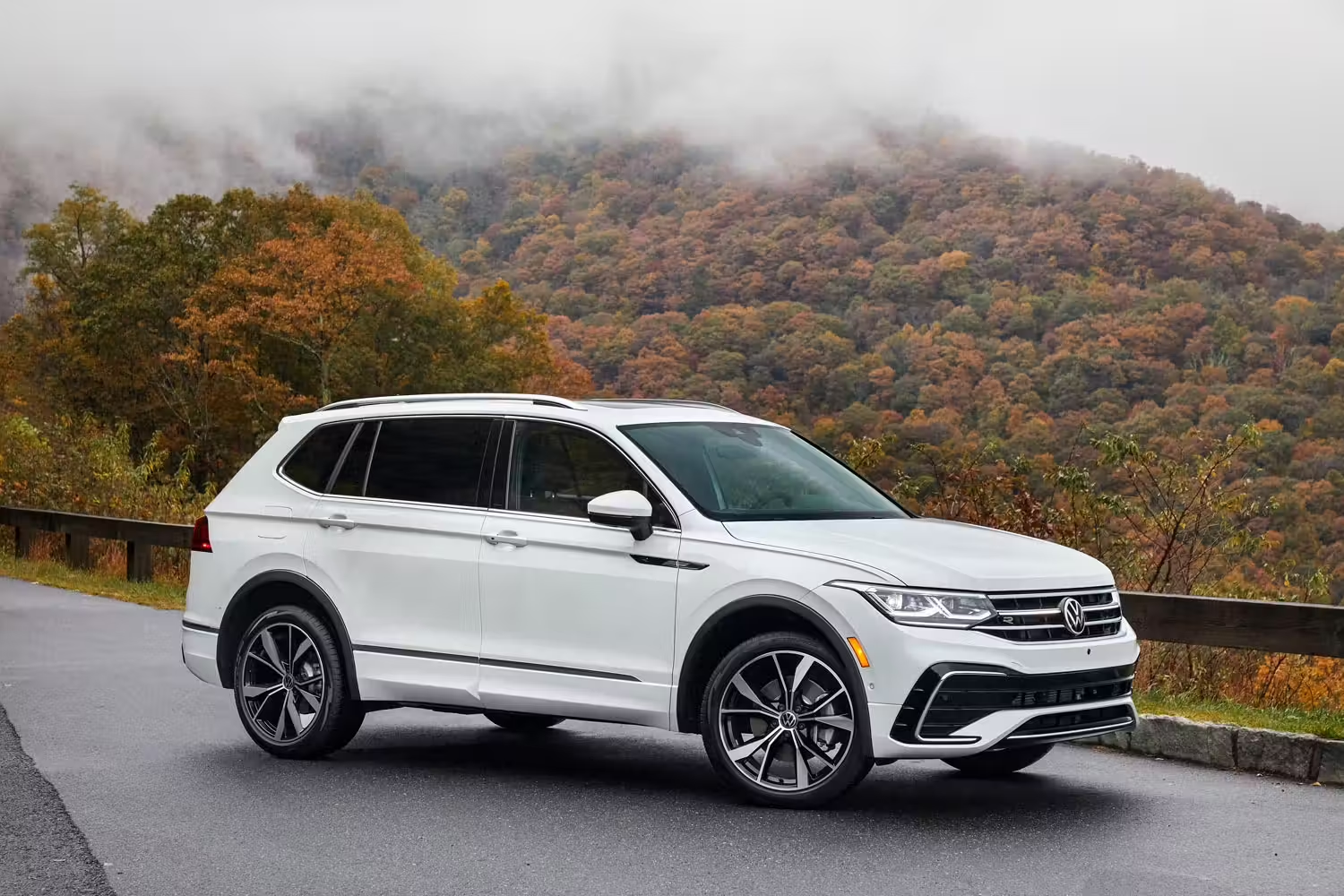
The flat coastal plains and tidal creeks surrounding Little River present a specific set of driving challenges that differ from mountainous regions. While we do not face steep alpine inclines, the presence of loose sand near boat ramps and the frequent heavy rainstorms characteristic of the Atlantic coast make traction a primary concern. A two-wheel drive system, specifically front-wheel drive, is often sufficient for daily commuting because the weight of the 2.0L I4 engine sits directly over the drive wheels, providing stable grip on paved surfaces. However, all-wheel drive systems like 4MOTION offer a significant advantage when the pavement ends or when sudden downpours create standing water on the roadway.
Unlike traditional four-wheel drive, which often requires manual engagement, the 4MOTION system found in models like the 2026 Volkswagen Atlas is proactive. It monitors wheel slip constantly and can redistribute power between the front and rear axles before a loss of traction occurs. This is particularly useful for residents who frequent the waterfront or navigate the marshy areas near the Intracoastal Waterway. If you are unsure which system fits your weekend plans, you can (843) 353-1118 to speak with our team about the specific capabilities of our current lineup. For those ready to see these systems in action, we invite you to visit our showroom on Highway 17 to test drive both configurations back-to-back.
Table of Contents
- The Financial Impact of Drivetrain Choice on Insurance and Purchase Price
- Fuel Economy Realities and the AWD Efficiency Penalty
- Maintenance Requirements and Tire Longevity for 4MOTION Systems
- Resale Value and Long-Term Depreciation Trends
- Common Questions Regarding All-Wheel Drive Performance and Cost
- Finding the Right Drivetrain for Your Lifestyle at East Coast Volkswagen
The Financial Impact of Drivetrain Choice on Insurance and Purchase Price
Choosing all-wheel drive typically involves a higher initial investment compared to a standard two-wheel drive model. In our new Volkswagen inventory, the 2026 Volkswagen Atlas SE with 4MOTION starts at an MSRP of $43,286, while moving up to the SE w/Tech trim brings the starting price to $48,891. This price gap reflects the mechanical complexity of adding a rear differential, a transfer case, and additional drive shafts. For many buyers, this upfront cost is balanced by the added safety and capability the system provides. If you are looking to manage your monthly budget while opting for these features, we recommend that you get pre-approved today to see how the drivetrain choice affects your specific financing terms.
Pricing
MSRP and destination charges
| Feature | SE | SE w/Tech | Atlas Peak Edition | SEL | SEL Premium R-Line |
|---|---|---|---|---|---|
| Starting MSRP | $43,286 | $48,891 | $51,065 | $52,722 | $57,738 |
Lowest starting MSRP: SE at $43,286
Engine & Performance
| Feature | Standard across all trims |
|---|---|
| Engine | 2.0L I4 |
| Transmission | Automatic |
| Drivetrain | 4WD |
Insurance premiums also factor into the long-term cost of ownership. Because all-wheel drive vehicles are more complex and contain more expensive components to repair or replace following an accident, insurance companies often charge a slightly higher premium for these models. However, the difference is usually modest and can vary based on the safety ratings of the vehicle. For instance, the 2026 Volkswagen Atlas is an IIHS TOP SAFETY PICK, which may help mitigate some of the insurance costs associated with its advanced drivetrain. Those who are looking for a balance between traction and value might also explore our used Volkswagen inventory, where the initial depreciation of an all-wheel drive model has already occurred, often making the price gap between drivetrain types much smaller.
Fuel Economy Realities and the AWD Efficiency Penalty
The mechanical components required to power all four wheels add weight and create internal friction, which generally results in a lower fuel economy rating than two-wheel drive counterparts. For example, the 2026 Volkswagen Taos SE with 4MOTION and its 1.5L I4 engine delivers an EPA-rated 25 mpg city / 33 mpg hwy. While these numbers are impressive for a capable SUV, a front-wheel drive version of a similar vehicle typically gains a few miles per gallon by reducing the parasitic loss of the additional drivetrain parts. You can compare these efficiency figures in person by visiting our online showroom to view the full specifications for each model.
Fuel Economy
EPA-estimated fuel economy ratings
| Feature | SE | SE w/Tech | Atlas Peak Edition | SEL | SEL Premium R-Line |
|---|---|---|---|---|---|
| City MPG | 21 mpg | 20 mpg | 19 mpg | 20 mpg | 19 mpg |
| Highway MPG | 26 mpg | 26 mpg | 26 mpg | 25 mpg | 25 mpg |
| Combined MPG | 24 mpg | 23 mpg | 23 mpg | 23 mpg | 22 mpg |
Standard across all trims: Fuel Type Unleaded
Best combined fuel economy: SE at 24 mpg
To help offset this efficiency gap, modern Volkswagen vehicles utilize "on-demand" systems that primarily operate in two-wheel drive mode during steady highway cruising. Power is only sent to the rear wheels when the sensors identify wheel slip. This engineering approach allows models in our new Taos inventory to maintain competitive fuel costs while still offering the peace of mind that comes with all-wheel drive. Maintaining your vehicle with genuine components from our parts department, such as high-quality air filters and recommended synthetic oils, further ensures that your drivetrain operates as efficiently as possible, regardless of how many wheels are receiving power.
Maintenance Requirements and Tire Longevity for 4MOTION Systems
When I walk families through the service requirements of a new SUV, they often ask if all-wheel drive is more expensive to maintain over time. While the core engine maintenance remains the same, all-wheel drive systems do require specialized attention at specific intervals. For a vehicle like the 2026 Volkswagen Atlas, this includes periodic inspections of the 4MOTION coupling and changing the differential fluid. These additional service points are vital for ensuring the longevity of the system, especially for drivers in Wilmington who deal with the stop-and-go traffic of a bustling downtown environment. Neglecting these fluids can lead to premature wear of the internal clutches that manage power distribution.
Tire care is another area where drivetrain choice makes a significant difference. All-wheel drive vehicles are sensitive to differences in tire circumference. If one tire is significantly more worn than the others, it can cause the system to engage traction control unnecessarily, leading to heat and wear on the center differential. We recommend that all four tires have a tread depth within 2/32 to 3/32 of an inch of each other. This often means that if one tire suffers unrepairable damage, you may need to replace all four to protect the drivetrain. To stay ahead of these requirements, you can schedule service today for a professional rotation and alignment. For those considering a pre-owned model, reviewing our used car checklist can help you identify if a previous owner maintained the tires correctly, which is a key indicator of the health of the Volkswagen Atlas or Tiguan you are considering.
Resale Value and Long-Term Depreciation Trends
All-wheel drive vehicles often command a higher resale value than their two-wheel drive counterparts, particularly in regions where weather can be unpredictable. Even in coastal areas, the versatility of a vehicle that can handle sandy paths or wet boat ramps makes it more desirable to a broader range of second-hand buyers. When you are ready to move into a new model, such as the highly anticipated new ID. Buzz, having a well-maintained all-wheel drive vehicle can result in a stronger offer when you value your trade-in with our team. This higher residual value can effectively "pay back" a portion of the initial higher purchase price over the years you own the car.
Warranty
Factory warranty coverage
| Coverage | Duration |
|---|---|
| Basic | 3 years / 36,000 miles (New Vehicle Limited Warranty; bumper-to-bumper virtually all components) |
| Powertrain | 5 years / 60,000 miles (Powertrain Limited Warranty) |
| Corrosion | Corrosion Perforation Limited Warranty |
| Roadside Assistance | 24-Hour Roadside Assistance Services |
Depreciation rates for all-wheel drive SUVs tend to be slightly lower because they are viewed as more versatile for different lifestyles. Whether a future buyer is a young professional in an urban center or a retiree looking for a stable beach cruiser, the added capability of a system like 4MOTION is a selling point that transcends demographics. If you are debating which drivetrain will best serve your long-term financial goals, taking our car buying quiz can help narrow down your priorities between immediate fuel savings and long-term value retention.
Common Questions Regarding All-Wheel Drive Performance and Cost
Q: Is all-wheel drive better than front-wheel drive for driving in heavy rain?
All-wheel drive provides superior traction when accelerating from a stop on wet or slippery surfaces by distributing power to all four wheels. However, it is important to remember that it does not improve your ability to brake or turn. Standard safety features like electronic stability control and high-quality tires are just as critical for maintaining control during a coastal downpour.
Q: Do I have to replace all four tires if only one is damaged on an AWD vehicle?
Most manufacturers, including Volkswagen, recommend that all four tires have nearly identical tread depth to avoid straining the all-wheel drive system. If the difference in tread depth exceeds 3/32 of an inch, the system may experience mechanical stress. We can measure your remaining tread at our service center to determine if a single tire replacement is a safe option for your specific vehicle.
Q: Can I manually turn off the AWD in my Volkswagen to save gas?
Modern 4MOTION systems are computer-controlled and fully automatic. They are designed to operate in a fuel-efficient mode by default, only engaging the rear wheels when the sensors detect a loss of traction. This active nature eliminates the need for a manual switch while still providing the efficiency benefits of a two-wheel drive system during normal highway cruising.
Q: Which Volkswagen models are available with all-wheel drive?
We offer several popular models with available all-wheel drive, including the Atlas, the Tiguan, and the Taos. For those interested in a more compact or sporty option, you can also find performance-oriented drivetrains in our Golf lineup. If you need a vehicle with more cargo space, our new Atlas Cross Sport inventory also features many 4MOTION equipped trims.
Q: Does all-wheel drive help with towing a boat?
Yes, all-wheel drive is highly beneficial when pulling a trailer up a slippery or sandy boat ramp. By providing power to both axles, the vehicle is less likely to experience wheel spin on the incline. If you are planning to tow, check out our new Tiguan inventory for models that balance daily efficiency with the traction needed for light-duty towing.
Finding the Right Drivetrain for Your Lifestyle at East Coast Volkswagen
Choosing between all-wheel drive and two-wheel drive ultimately comes down to how you plan to use your vehicle along the coast. For many, the efficiency and lower maintenance of a front-wheel drive model are the perfect match for a standard commute. For others, the added security of 4MOTION is worth the investment for beach trips, towing, and peace of mind during our frequent rainstorms. Our team is dedicated to helping you find the configuration that fits your life without any pressure. You can find our dealership in Myrtle Beach to explore our full range of options in person.
When you are ready to take the next step, our finance and service experts are here to provide the transparency you deserve. Whether you want to compare the MPG of different trims or need an estimate for your next service visit, we are just a phone call or a short drive away. You can reach us at (843) 353-1118 to ask any remaining questions, or simply stop by our showroom to get started on your next adventure.
Categories:
Comparisons