

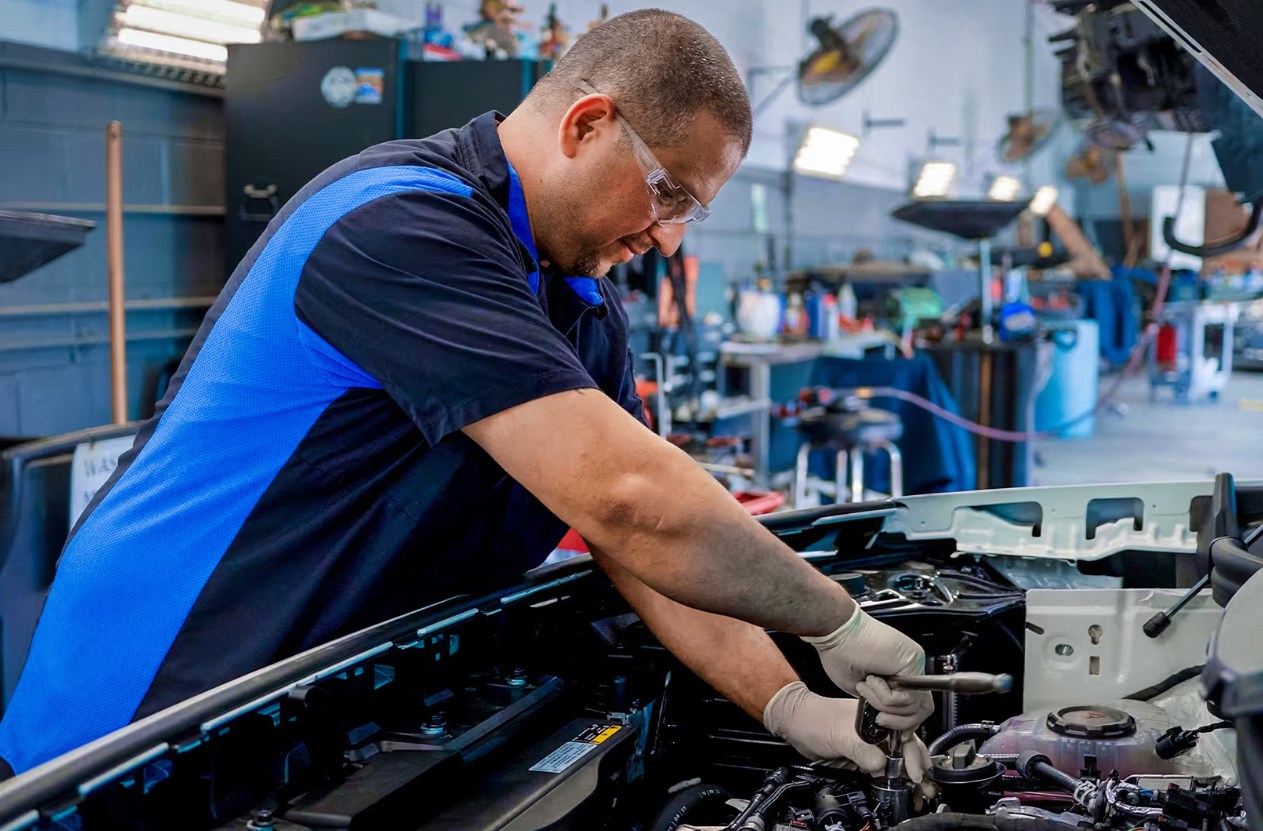
Routine automotive upkeep generally costs between $35 and $110 for an oil change, $150 to $300 per axle for brake pad replacement, and $100 to $250 for targeted fluid exchanges or diagnostic evaluations. Annual maintenance budgets for passenger cars and sport utility vehicles average $400 to $800 to maintain fluid integrity, friction materials, and tire life.
Service pricing reflects differences in component design, oil capacity, and replacement parts. Standard conventional motor oil services sit on the lower end of the spectrum, while turbocharged engines require premium full synthetic formulations that operate at higher thermal thresholds. Replacing brake pads on a compact vehicle requires less labor and smaller friction surfaces than servicing multi-piston calipers on three-row family haulers. Routine tire rotations and balancing services run between $25 and $60, helping prevent irregular tread wear across front and rear drive axles.
| Maintenance Service | Typical Regional Cost Range | Recommended Interval | Primary Cost Factors |
|---|---|---|---|
| Conventional Oil Change | $35 to $55 | 3,000 to 5,000 miles | Engine displacement, oil capacity |
| Full Synthetic Oil Change | $65 to $110 | 7,500 to 10,000 miles | Synthetic oil grade, filter design |
| Brake Pad Replacement (Per Axle) | $150 to $300 | 30,000 to 60,000 miles | Ceramic vs. semi-metallic, rotor resurfacing |
| Multi-Point Diagnostic Inspection | $100 to $180 | Annual or as needed | Sensor complexity, scan time |
| Tire Rotation and Balance | $25 to $60 | 5,000 to 7,500 miles | Wheel size, dynamic balancing needs |
Transparent estimates prevent financial surprises before work begins. Drivers who drop off a vehicle at 8756 Us Highway 17 Byp, South, Myrtle Beach, SC 29588 can use our service facility directions to find us along the bypass. Clear upfront estimates and warranty-backed parts help sustain reliable vehicle performance over every season. To clarify repair estimates or ask about manufacturer-specified fluids, reach out by calling our service advisors directly.
Table of Contents
- How Often Should Full Synthetic Oil Be Changed?
- How Often Should Auto A/C Refrigerant Be Checked or Recharged?
- What Diagnostic Tools and Maintenance Services Do Local Service Centers Provide?
- How Do Customer Satisfaction and Tire Warranties Compare Across Service Facilities?
- Scheduling, Mobile Repair, and Payment Options for Beach Truck & RV Center
- What Should You Know Before Scheduling Vehicle Maintenance?
- What Certified Vehicle Care Does East Coast Volkswagen Offer?
How Often Should Full Synthetic Oil Be Changed?
Full synthetic motor oil requires replacement every 7,500 to 10,000 miles or once every 12 months under standard driving patterns. Vehicles driven under severe operating conditions benefit from shorter intervals between 5,000 and 7,500 miles to counter thermal breakdown, fuel dilution, and contaminant buildup.
Operating conditions dictate whether an engine follows standard or severe service intervals. Short trips under five miles do not allow motor oil to reach its optimal operating temperature of roughly 212 degrees Fahrenheit. When oil remains cool, moisture and unburned fuel accumulate inside the crankcase rather than evaporating, thinning the oil and degrading protective detergent additives. Extended idling, repeated stop-and-go commuting, and towing also classify as severe service.
Coastal environments introduce ambient challenges that alter oil longevity. For drivers taking frequent short trips past tidal marshes near the Little River Inlet, marine air containing microscopic salt mist mixes with high summer humidity to accelerate oil oxidation. Moisture settling in the crankcase during prolonged parking promotes internal surface tarnishing if the oil additives become depleted.
Adhering to strict factory-approved oil specifications safeguards engine warranties and protects tight mechanical clearances. Modern engines rely on precision variable valve timing actuators that use hydraulic oil pressure to adjust camshaft timing. Sludge or degraded viscosity impedes these hydraulic passages, triggering timing faults and reducing fuel economy. Regularly pulling the dipstick between service visits allows drivers to monitor fluid level, clarity, and scent.
How Often Should Auto A/C Refrigerant Be Checked or Recharged?
Automotive air conditioning refrigerant does not require routine replenishment or periodic recharges because automotive cooling loops function as hermetically sealed, pressurized systems. Refrigerant levels drop only when physical leaks develop in aluminum lines, rubber o-rings, the evaporator core, or the condenser face.
A functioning climate control system retains its initial factory charge for the operational life of the vehicle. If cabin air blows lukewarm or vents take extended periods to lower internal cabin temperatures, an underlying defect is allowing pressurized gas to escape. To keep the climate system operating efficiently, service facilities recommend an annual inspection before summer temperatures arrive, focusing on cooling output rather than blindly adding pressurized gas.
Modern passenger vehicles use either R-134a or low-global-warming-potential R-1234yf refrigerant. Intermixing these chemicals damages internal seals and ruins the compressor. Professional technicians perform structured diagnostic routines when low cooling performance suggests an operational leak:
- Visual inspection of the condenser fins behind the front grille to identify rock punctures, bent fins, or road debris blockages.
- Electronic sniffer scanning across refrigerant lines, service ports, and the compressor clutch to register escaping gas particles.
- Evacuation and pressure testing using dedicated recovery stations that pull the system into a deep vacuum to verify airtight integrity.
- Injection of ultraviolet fluorescent dye alongside compatible polyalkylene glycol oil to pinpoint microscopic leak locations under specialized lighting.
- High-pressure and low-pressure gauge analysis to evaluate compressor piston efficiency and expansion valve modulation.
Relying on DIY recharge cans from retail counters carries serious mechanical risk. These consumer canisters often lack accurate pressure regulators and frequently contain chemical stop-leak additives. These sealers harden when exposed to ambient moisture, clogging the micro-channels of the condenser, gumming up the expansion valve, and ruining professional recovery machines.
What Diagnostic Tools and Maintenance Services Do Local Service Centers Provide?
Certified repair facilities utilize specialized OBD-II electronic interface scanners, digital storage oscilloscopes, and computerized multi-point vehicle inspection platforms to isolate mechanical and electronic issues within 30 to 60 minutes. Modern diagnostic equipment interfaces directly with powertrain, body, and chassis control modules to interpret live sensor streams rather than guessing at trouble codes.
Comprehensive maintenance menus address all core automotive operating systems. Technicians complete transmission fluid exchanges, anti-lock brake flushes, dynamic four-wheel alignments, and cooling system flushes alongside standard oil and filter changes. Digital vehicle inspections capture high-resolution imagery of worn suspension bushings, thinning brake friction material, and cracked serpentine belts, sending digital reports directly to vehicle owners for transparent service approvals.
Advanced scan tools read live data PIDs, graph fuel trim percentages, and test misfire counters across individual engine cylinders. When a warning light flashes on the instrument cluster, computer analysis reveals whether an oxygen sensor has physically failed or if an unmetered intake vacuum leak is throwing off air-fuel calculations. Technicians also calibrate forward-facing radar units, blind-spot sensors, and lane-keeping cameras after wheel alignments or windshield replacements to maintain advanced driver-assistance features.
Preventative inspections conducted at regularly scheduled intervals reveal small issues before they generate high towing expenses. To ensure every vehicle system is performing to factory specifications, motorists can easily schedule an appointment online with our certified technicians.
How Do Customer Satisfaction and Tire Warranties Compare Across Service Facilities?
Independent repair facilities and franchised dealership service departments frequently record higher consumer satisfaction marks than national tire and lube retail chains. Independent shops gain high marks for direct communication with the lead technician, while franchised centers excel in specialized factory tooling, proprietary software updates, and rigorous technician certification programs.
National mass-market repair chains manage high vehicle volume through generalized technician training. While these facilities handle rapid tire rotations and basic fluid drains, complex computerized electrical diagnosis, turbocharger troubleshooting, and brand-specific warranty claims demand specialized training. Dealerships and dedicated specialty shops utilize dedicated diagnostic computers capable of reflashing control units with the latest manufacturer calibrations.
Road hazard tire warranties present notable operational distinctions between chain retailers and specialized centers:
- Chain Transferability: National tire retailers honor road hazard certificates across their retail locations nationwide, offering puncture repair, pro-rated tread depth replacements, and tire rebalancing.
- Exclusions and Limitations: Many chain store protection agreements exclude commercial vehicles, neglect wear from improper alignment, and deny coverage if scheduled rotations are skipped.
- Factory Alignment Matching: Dealerships and specialty shops match tire replacements to original equipment rolling resistance, speed ratings, and load indexes, avoiding irregular handling dynamics.
- Direct Warranty Support: Specialized service centers process tire claims in coordination with original equipment tire manufacturers, maintaining strict suspension and all-wheel-drive circumference tolerances.
Choosing between service facilities depends on the technical complexity of the required work. Routine tire mounting on standard passenger wheels fits broad retail networks, whereas precise electronic troubleshooting, mechanical warranty work, and factory recalls necessitate dedicated service centers equipped with specialized engineering data.
Scheduling, Mobile Repair, and Payment Options for Beach Truck & RV Center
Beach Truck & RV Center operates a commercial repair facility at 567 George Bishop Pkwy that accommodates diesel trucks, recreational vehicles, utility trailers, and commercial fleet equipment. The facility maintains weekday operating hours from 7 a.m. to 6 p.m. and remains closed on weekends, while supporting after-hours vehicle drop-off and pickup routines for commercial drivers.
The facility provides both in-shop mechanical work and on-site mobile service crews that travel to stranded fleet trucks, box trucks, and motorhomes facing mechanical disablement. Their service scope encompasses diesel exhaust fluid systems, diesel particulate filters, turbocharger rebuilds, fuel injection systems, head gaskets, and Department of Transportation safety inspections. Third-party financing options allow commercial operators and recreational vehicle owners to spread repair expenses over time, alongside same-day turnaround on routine mechanical jobs.
While mobile and heavy-duty shops manage large diesel engines and commercial utility trailers, standard passenger sedans, hatchbacks, and crossover sport utility vehicles require dedicated factory diagnostic links and precision metric hardware. Maintaining modern passenger cars demands targeted computerized coding tools, exact fluid viscosity ratings, and genuine original equipment components sourced directly through our dedicated parts counter.
What Should You Know Before Scheduling Vehicle Maintenance?
Q: How can drivers distinguish between a dirty cabin filter and low refrigerant when A/C airflow drops?
A clogged cabin air filter physically restricts the volume of air blowing out of the dashboard vents, but the air coming through remains cold. When refrigerant levels drop due to an active leak, the blower motor pushes a strong, unrestricted volume of air, but the air remains warm or ambient temperature. Technicians inspect the cabin air filter first because replacing an obstructed filter takes only a few minutes and restores full airflow without requiring high-pressure diagnostic equipment.
Q: What maintenance records are required to keep a factory powertrain warranty valid?
Automakers require clear, dated documentation demonstrating that oil changes, fluid flushes, and filter replacements were performed within the mileage and time intervals printed in the owner's manual. Acceptable records include itemized repair orders from certified service facilities showing the date, mileage, vehicle identification number, and specific oil specifications. Drivers who perform maintenance outside of franchised dealerships must retain parts receipts showing the exact volume and viscosity of manufacturer-approved oil along with matching original equipment filter purchases.
Q: How does coastal humidity affect brake pad and rotor wear?
High ambient humidity combined with airborne ocean salt creates rapid surface oxidation on cast iron brake rotors when vehicles sit parked overnight. While this thin layer of surface rust normally sweeps clean during the first few brake applications of the morning, persistent moisture and salt can cause the brake pads to bind inside their caliper slide pins. Uneven pad movement leads to premature friction taper, rotor grooving, and unwanted pedal pulsation, making annual slide-pin lubrication and visual brake inspections vital in coastal zones.
Q: Which mechanical symptoms require immediate service versus scheduled maintenance?
Flashing check engine lights, low engine oil pressure warnings, a spongy brake pedal that sinks toward the floorboards, and rapidly rising temperature gauges demand immediate vehicle shutdown and prompt mechanical evaluation. Continuing to drive with these active warnings risks catastrophic engine seizure or total hydraulic brake loss. In contrast, steady check engine lights for emissions codes, minor tire pressure warnings, maintenance interval reminders, or faint brake squeaks indicate issues that can be addressed through a regularly scheduled service appointment.
Q: What emergency support covers unexpected breakdowns on the road?
Newer passenger vehicles often carry comprehensive manufacturer roadside assistance coverage to assist drivers facing sudden mechanical failures, dead batteries, or flat tires. Rather than seeking out unvetted towing operators, owners can coordinate emergency transport and certified technical support by contacting Volkswagen Roadside Assistance: 1-800-411-6688. This coverage connects drivers to authorized brand facilities that utilize genuine replacement components and certified diagnostic workflows.
What Certified Vehicle Care Does East Coast Volkswagen Offer?
Our certified service department provides complete automotive care, including factory-scheduled maintenance, electronic engine diagnostics, brake replacements, precision four-wheel alignments, and climate control servicing. Every repair is performed by factory-trained technicians using specialized diagnostic tools, precision calibration software, and genuine original equipment manufacturer parts designed to protect your vehicle's longevity and warranty standing.
Our customer service commitment includes upfront written estimates and our Lifetime Service Guarantee, ensuring that if we ever fail to return your vehicle on time as promised, we arrange a complimentary rental. While our technicians service your vehicle, you can relax in our customer lounge featuring leather seating, private work areas, complimentary Wi-Fi, and gourmet coffee. Drivers planning their next vehicle upgrade can use our online vehicle matching quiz to find a vehicle suited to their needs, visit our service center location, or call our service team at (843) 353-1118 to schedule maintenance today.
Categories:
Service