

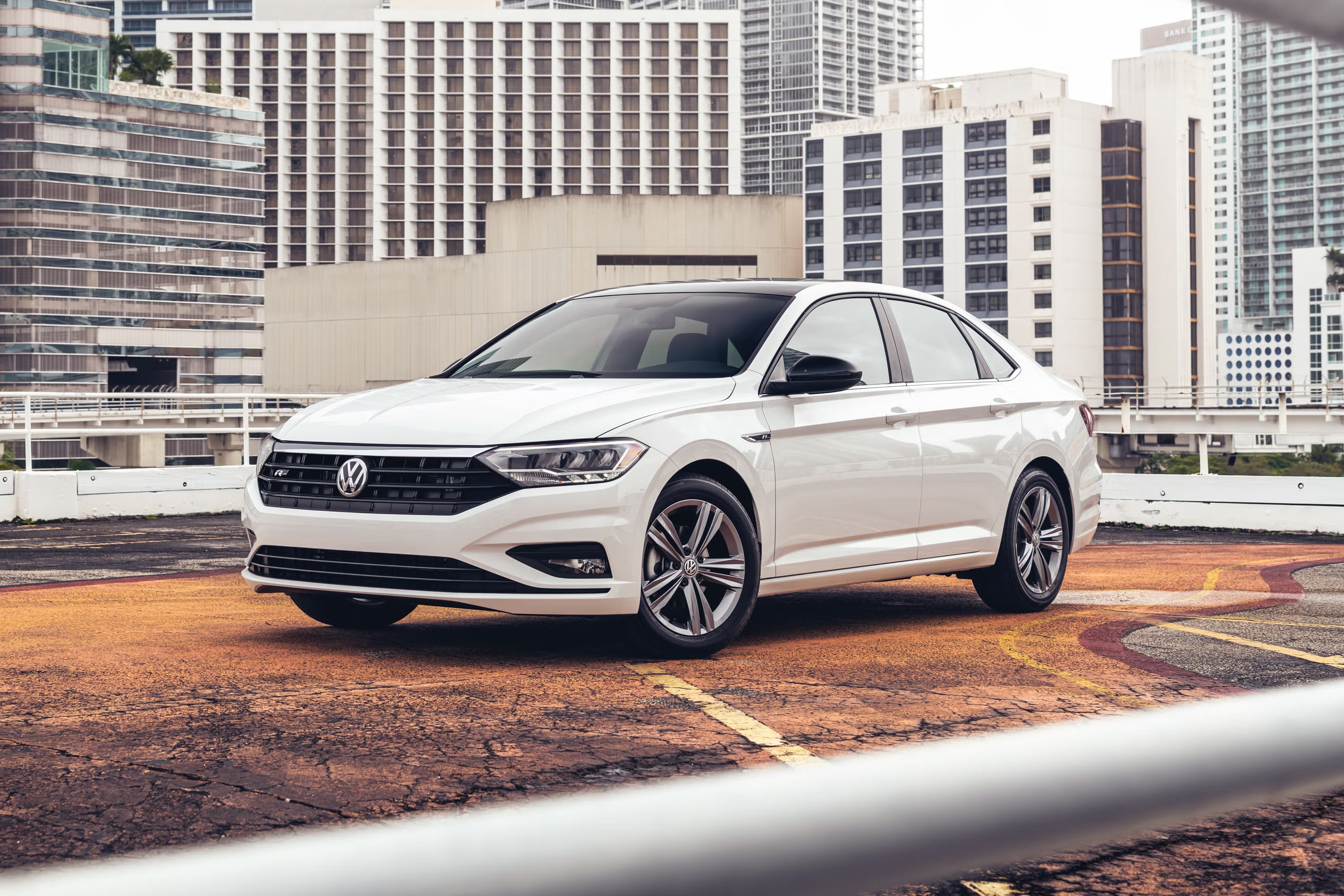
Used Volkswagens demonstrate long-term reliability over high mileage when owners strictly follow factory maintenance schedules. Modern Volkswagen engineering utilizes precision mechanical tolerances, direct injection, and turbocharging, which require timely fluid changes with approved specifications and periodic transmission maintenance. With documented routine upkeep, high-mileage models comfortably exceed six-figure mileage thresholds while maintaining baseline performance, fuel efficiency, and structural integrity.
Maintaining a pre-owned Volkswagen requires an understanding of European mechanical design. Unlike naturally aspirated engines that tolerate deferred maintenance, Volkswagen powertrains—such as the 1.5L turbocharged engine found in the Jetta or the 2.0L TSI engine powering the Tiguan and Atlas—rely on specific fluid pressures and thermal management to protect key moving parts. When oil changes are executed at the recommended 10,000-mile or 12-month interval using factory-certified synthetic fluids, friction and thermal degradation remain minimal.
Living near the coast introduces specific environmental factors that impact vehicle longevity. High humidity, warm summer temperatures, and airborne salt along coastal roads accelerate the oxidation of exposed metal underbody components and electrical connections. Regular multi-point inspections ensure that protective undercoating remains intact, rubber suspension bushings retain their elasticity, and brake lines stay clear of surface corrosion.
Vehicles like a pre-owned Jetta rated at 29 city / 40 hwy mpg achieve exceptional efficiency over years of driving when secondary systems, including spark plugs and oxygen sensors, are kept in peak condition. For detailed guidance on caring for your specific model year, give our service team (843) 353-1118 a quick call or drop by our Myrtle Beach showroom location for a comprehensive multi-point inspection.
Table of Contents
- What Service Items Are Due at the 40,000-Mile Milestone for a Used Volkswagen?
- What Happens If You Use Non-Approved Engine Oil in Your Volkswagen?
- Understanding the DSG Transmission: Maintenance Costs, Symptoms, and DIY Risks
- How Do Used Volkswagen Maintenance Costs Compare to Toyota, Honda, and Audi?
- Are Extended Service Contracts Worth It for High-Mileage Volkswagens?
- Independent Shops vs Certified Dealer Service: Protecting Your Used Volkswagen
- Frequently Asked Questions About Used Volkswagen Maintenance
- Key Maintenance Steps to Extend Your Used Volkswagen's Lifespan
What Service Items Are Due at the 40,000-Mile Milestone for a Used Volkswagen?
The 40,000-mile maintenance interval is one of the most critical milestone visits for any modern Volkswagen, requiring spark plug replacement, air filter renewals, and a full drivetrain inspection. For vehicles equipped with a dual-clutch gearbox, this visit also marks the required transmission fluid and filter change to prevent internal clutch wear.
At 40,000 miles, several key wear components reach the end of their design lifespan:
- Spark plug replacement to prevent cylinder misfires and protect ignition coil packs on turbocharged engines.
- Engine air filter replacement to clear debris and maintain proper air-fuel ratios into the turbocharger compressor wheel.
- Cabin dust and pollen filter replacement to restore interior air filtration and HVAC blower motor efficiency.
- Transmission fluid renewal for models featuring a 6-speed DSG automatic transmission to flush out friction particles.
- Brake fluid flush, which Volkswagen schedules every two years regardless of mileage, to eliminate absorbed moisture and prevent internal hydraulic corrosion.
Our service advisors frequently observe that pre-owned Volkswagen buyers ask whether spark plug replacement can wait past the 40,000-mile mark. Delaying spark plug service causes the ignition coils to work harder to bridge the widened plug gap, often resulting in premature coil pack failure under heavy throttle demand.
Addressing these mileage milestones on time preserves engine performance and prevents chain-reaction mechanical issues. You can easily stay on top of your maintenance schedule by scheduling a service appointment online or ordering genuine filters and ignition parts directly from our genuine Volkswagen parts department.
What Happens If You Use Non-Approved Engine Oil in Your Volkswagen?
Using non-approved engine oil in a Volkswagen engine causes rapid thermal breakdown, internal sludge buildup, accelerated turbocharger bearing wear, and potential engine failure. Volkswagen engines require oils engineered to satisfy rigorous internal standards, such as the VW 502 00 specification or VW 508 00 specification, which feature specific additive packages to handle extreme heat and shear stress.
Turbocharged engines run significantly hotter than conventional non-turbo engines because the turbocharger center housing is cooled and lubricated directly by engine oil. Off-the-shelf conventional motor oils lack the thermal stability needed to withstand these localized temperatures. When non-approved oil breaks down, it forms carbon deposits known as coking inside the oil feed lines, starving the turbocharger shaft bearings of oil and causing sudden turbo failure.
Furthermore, direct-injection engines do not spray fuel over the intake valves, meaning valve stems rely entirely on clean oil vapor management to prevent carbon buildup. Non-approved oils evaporate more readily at high operating temperatures, depositing heavy soot on the intake valves, which leads to rough idling, reduced horsepower, and loss of compression.
In coastal areas like Little River, where short trips and high ambient humidity can lead to moisture accumulation inside the crankcase, using the exact oil viscosity and specification listed on your oil cap is essential. Proper additive chemistries neutralize moisture and acids, keeping internal engine components fully protected between service visits.
Understanding the DSG Transmission: Maintenance Costs, Symptoms, and DIY Risks
Maintaining a Volkswagen Direct-Shift Gearbox requires periodic fluid and filter renewals every 40,000 to 80,000 miles depending on the model year, costing an average of $300 to $500 for specialized fluid, filter materials, and technician labor. Attempting a DIY fluid change on a DSG transmission carries significant risk because setting the correct fluid level requires precise diagnostic scan tools to read fluid temperature during the fill process.
A DSG transmission functions like an automated manual transmission, utilizing two internal wet clutches controlled by an electronic hydraulic control unit known as the mechatronic module. Over time, friction material from the clutch plates accumulates inside the fluid. If this fluid is not replaced, suspended metal particles cause valve body abrasion and erratic hydraulic pressure delivery.
Key symptoms of a failing or neglected DSG transmission include:
- Shuddering or jerky engagement when pulling away from a complete stop.
- Delayed gear selection when shifting from park into drive or reverse.
- Harsh or noisy downshifts during low-speed deceleration.
- Illumination of transmission error warnings or check engine lights on the instrument cluster.
Performing a DSG fluid service at home without specialized equipment frequently leads to improper fluid levels. The fill level on a dual-clutch transmission must be checked while the engine is running and the transmission fluid temperature is precisely between 35°C and 45°C. Overfilling or underfilling by even half a quart can cause fluid foaming, clutch slippage, and irreversible mechatronic unit damage.
How Do Used Volkswagen Maintenance Costs Compare to Toyota, Honda, and Audi?
Routine maintenance for a used Volkswagen costs approximately 15% to 25% more annually than mainstream Japanese vehicles like a Toyota or Honda, primarily due to specialized European fluid requirements and engineered assemblies. Conversely, Volkswagen service costs run 20% to 35% lower than luxury European brands like Audi, despite sharing underlying platform architectures and engine designs.
| Brand Comparison | Average Maintenance Cost Structure | Key Fluid & Spec Requirements | Engineering Approach |
|---|---|---|---|
| Volkswagen | Moderate European standard | Vehicle-specific synthetic specs ( VW 502 00 specification) | Direct-injection turbochargers, dual-clutch option |
| Toyota / Honda | Baseline economy standard | Standard off-the-shelf API oils | Naturally aspirated or light-duty turbo systems |
| Audi | Premium luxury standard | High-performance synthetic specs, specialized diagnostics | Advanced AWD systems, complex multi-link setups |
While a Japanese economy vehicle may use generic off-the-shelf synthetic blend oils and low-cost brake friction pads, a Volkswagen utilizes high-carbon brake rotors and specialized synthetic motor oils engineered for high-shear environments. This difference in specification translates into precise handling response, confident high-speed brake feel, and excellent structural rigidity.
Drivers commuting along routes connecting Wilmington to coastal highway corridors often prefer Volkswagen models for their refined cabin insulation and autobahn-tested high-speed stability. The slight increase in routine upkeep costs over economy brands pays dividends in driving dynamics, solid door-seal isolation, and long-distance seat comfort.
Are Extended Service Contracts Worth It for High-Mileage Volkswagens?
An extended service contract is highly beneficial for a high-mileage Volkswagen because it protects owners against major unexpected mechanical expenses involving turbos, dual-clutch transmissions, and complex electronic modules. As factory warranty periods expire, an extended protection plan converts unpredictable repair bills into a fixed, manageable coverage agreement.
Modern pre-owned Volkswagens incorporate advanced vehicle architecture, including touch-screen infotainment displays, driver-assist radar sensors, automatic climate control actuators, and electronic parking brakes. Repairing these components out-of-warranty involves specialized labor and calibrated replacement assemblies.
Key components covered under comprehensive high-mileage service contracts include:
- Engine turbocharger assemblies, wastegate actuators, and intercoolers.
- DSG mechatronic units, internal gear sets, and hydraulic shift solenoids.
- All-wheel-drive coupling units, drive shafts, and rear differentials on models equipped with 4MOTION® all-wheel drive.
- Climate control compressors, condenser coils, and heater cores.
- Electronic control units, power window regulators, and steering column lock modules.
Choosing an extended service plan capped at a 100,000-mile extended service contract or higher allows owners to enjoy their vehicle with total peace of mind. Knowing that major mechanical systems are covered ensures that high-mileage ownership remains rewarding and financially predictable.
Independent Shops vs Certified Dealer Service: Protecting Your Used Volkswagen
While local independent repair shops can handle basic wear items like tires and wiper blades, certified dealership service ensures your Volkswagen is cared for by factory-trained technicians using specialized diagnostic software like ODIS diagnostic software. Furthermore, maintaining a documented dealer service history directly enhances vehicle trade-in and resale valuation by 10% to 15%.
Independent shops often rely on multi-brand generic scan tools that cannot read proprietary Volkswagen module fault codes or execute guided fault-finding routines. Dealership technicians complete regular factory training updates and utilize genuine OEM parts manufactured to exact factory metallurgical and dimensional tolerances. When critical components like timing chains, water pumps, or control modules are replaced, genuine OEM parts guarantee correct fitment and factory warranty backing.
Comprehensive maintenance documentation recorded through an authorized dealership provides future buyers with verifiable proof that all fluid intervals, recall updates, and technical service bulletins were completed properly. This documented history eliminates buyer uncertainty, allowing pre-owned vehicles to command top resale value.
For professional upkeep, software updates, or routine multi-point checks, visit our service center address or contact our team directly at (843) 353-1118 to speak with a Volkswagen service specialist.
Frequently Asked Questions About Used Volkswagen Maintenance
Q: How do I know which engine oil specification my Volkswagen requires?
Your vehicle's exact oil specification is printed on a label attached to the engine valve cover or upper radiator support, as well as in the owner's manual. Volkswagen uses specific coding standards like VW 502 00, VW 504 00, or VW 508 00 rather than simple viscosity ratings alone. Using oil that explicitly states compliance with your engine's VW specification ensures proper turbocharger lubrication and engine longevity.
Q: Does my Volkswagen engine use a timing belt or a timing chain?
Timing mechanisms vary by model year, engine family, and engine displacement across the Volkswagen lineup. Many modern 2.0L TSI engines utilize a timing chain engineered for long-term service, while select smaller engines or older diesel variants feature a rubber timing belt with specified replacement intervals. You can verify your exact engine configuration by providing your vehicle identification number to our service department.
Q: How often should the brake fluid be replaced on a pre-owned Volkswagen?
Volkswagen recommends replacing the brake fluid initial check three years after initial registration and every two years thereafter, regardless of total accumulated mileage. Brake fluid is hygroscopic, meaning it naturally absorbs ambient atmospheric moisture over time. Regular flushing prevents internal hydraulic master cylinder corrosion and maintains high fluid boiling points during repeated heavy braking.
Q: What should I bring with me to document service history when trading in my car?
To maximize your trade-in value, bring all stamped service booklets, dealership repair invoices, and printed oil change records showing dates and mileage. Complete documentation proving that critical major milestone services—such as DSG fluid changes, spark plug replacements, and brake flushes—were performed on schedule gives appraisers full confidence in the mechanical condition of your vehicle.
Q: Can I drive my vehicle if the check engine light comes on steady?
A steady check engine light indicates an active fault code within the engine or emissions system, and while the car remains drivable short term, it should be scanned by a technician promptly. If the check engine light is flashing rapidly, you must safely pull over and shut off the engine immediately, as a flashing light indicates severe misfires that can cause permanent catalytic converter damage.
Key Maintenance Steps to Extend Your Used Volkswagen's Lifespan
Keeping a pre-owned Volkswagen performing at its best requires proactive fluid management, strict adherence to factory milestone intervals, and prompt attention to minor maintenance needs. By choosing factory-approved synthetic oils, changing transmission fluids on schedule, and insisting on genuine OEM replacement parts, you ensure that your vehicle delivers quiet cabin comfort, crisp handling, and efficient performance over hundreds of thousands of miles.
When you invest in preventative care today, you avoid costly secondary repairs tomorrow while protecting your vehicle's long-term trade-in value. Whether your car is due for its 40,000-mile milestone inspection or requires specialized diagnostic evaluation, our factory-certified technicians are equipped with the specialized software and genuine parts necessary to do the job right. Contact our service team today to set up your next maintenance visit and keep your Volkswagen running like new.
© 2026 East Coast Volkswagen. All rights reserved.
Categories:
Service