

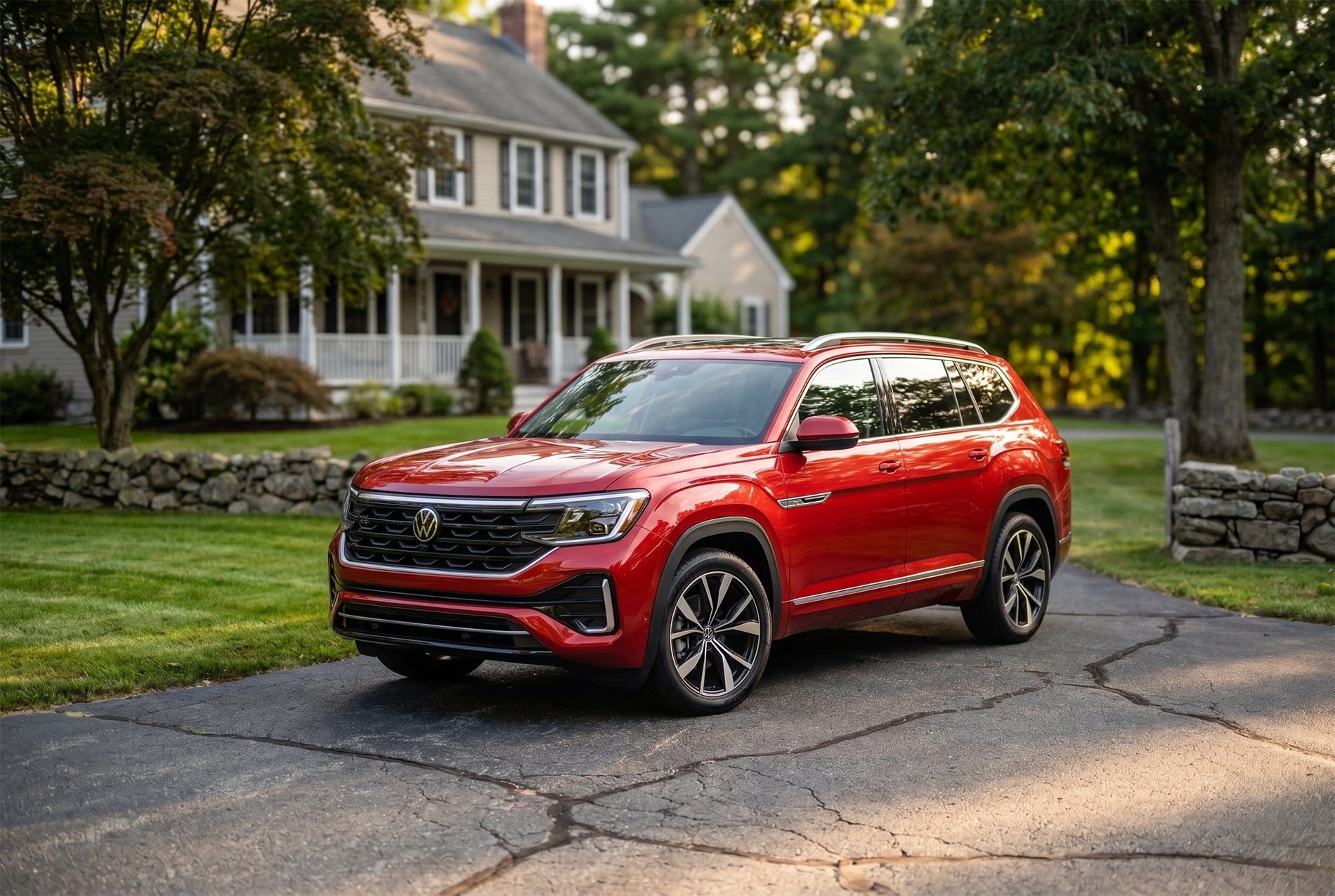
To get the best deal on a model year-end used car, time your purchase between late September and December during annual inventory turnover, target pre-owned models that have already absorbed their initial depreciation drop, and arrive pre-approved for financing. Combining dealer year-end incentives, trade-in volume increases, and month-end sales targets provides maximum negotiation leverage on total out-the-door pricing.
Model year turnover creates a distinct window of opportunity for pre-owned car buyers. As automakers release incoming vehicles, existing inventory on dealership lots undergoes an immediate valuation shift. Dealerships actively work to clear space and hit annual sales benchmarks, which increases negotiation flexibility across both outgoing new stock and incoming trade-ins. Understanding how these sales cycles operate allows you to structure your purchase strategy effectively.
Before visiting a showroom, start by narrowing down your vehicle criteria and evaluating your budget. Using an online vehicle quiz helps align your driving habits with appropriate model categories, whether you need a fuel-efficient daily driver or a spacious family SUV. Securing independent financing pre-approval establishes a firm interest rate benchmark and keeps negotiations focused strictly on the total purchase price rather than monthly payment manipulations.
When you are ready to explore available inventory and test-drive candidate vehicles, our team at East Coast Volkswagen is ready to assist. You can navigate directly to our showroom on Highway 17 Bypass to view our pre-owned selection, or give our sales department a quick call to verify vehicle availability before setting out.
Table of Contents
- How Does Model Year Turnover Affect Used Car Depreciation and Resale Value?
- How Can Buyers Identify Mid-Cycle Refreshes and Verify Build Dates?
- How Do Certified Pre-Owned Deals and Total Ownership Costs Compare to Late-Model Used Cars?
- When Do Dealers Offer the Most Negotiation Flexibility During Year-End Sales?
- Common Buyer Questions About Model Year-End Pre-Owned Shopping
- Key Strategies for Shopping Used Vehicles at Volkswagen Dealerships
How Does Model Year Turnover Affect Used Car Depreciation and Resale Value?
Model year turnover accelerates used car depreciation by instantly aging current inventory by one calendar year on market valuation sheets as soon as new models arrive. This shift causes an immediate drop in retail and trade-in values for late-model used cars, allowing savvy buyers to negotiate discounts of 15% to 20% below original MSRP equivalent values.
Depreciation follows a predictable mathematical curve, with the steepest value drop occurring during a vehicle's first three years. When new model-year vehicles begin landing on dealership lots in late summer and autumn, every pre-owned vehicle on the lot mathematically transitions to an older age bracket. A two-year-old vehicle effectively becomes a three-year-old vehicle in trade-in guidebooks overnight, regardless of its build month or actual mileage. This structural adjustment creates a favorable buying environment because retail pricing must calibrate downward to remain competitive against heavily discounted outgoing new models.
Furthermore, end-of-year sales promotions drive a significant surge in trade-in volume. As buyers purchase new outgoing models, dealerships experience an influx of well-maintained late-model trade-ins. This increase in pre-owned supply forces sales managers to adjust pricing aggressively to keep inventory turning over. For commuters making the daily drive from Little River down Highway 17, taking advantage of this initial depreciation drop on a two-year-old vehicle provides maximum long-term value retention.
Evaluating trade-in dynamics works both ways if you plan to replace an existing vehicle. Understanding your current car's market value ensures you receive fair compensation during the transaction. You can sell or trade in your current vehicle directly to establish a firm trade-in allowance, and review our pre-owned vehicle inspection checklist to ensure you evaluate every candidate pre-owned vehicle thoroughly before signing.
How Can Buyers Identify Mid-Cycle Refreshes and Verify Build Dates?
Buyers can identify mid-cycle refreshes by checking for major powertrain, chassis, or infotainment platform overhauls rather than minor cosmetic updates, while build dates are verified via the federal safety label on the driver-side door jamb and the 10th digit of the Vehicle Identification Number.
Distinguishing between a minor model-year update and a major mid-cycle refresh is critical when evaluating pre-owned value. A minor update typically consists of revised exterior paint options, updated wheel designs, or altered interior trim stitching. Conversely, a mid-cycle refresh often introduces structural chassis enhancements, updated engine configurations like an upgraded 2.0L TSI engine, or completely revised infotainment operating systems. Vehicles purchased immediately after a major refresh retain higher relative value over time compared to pre-refresh models from the preceding model year.
Verifying the exact manufacturing date requires looking beyond the advertised model year. The federal safety certification label, permanently affixed to the driver-side door pillar, explicitly states the month and calendar year the vehicle rolled off the assembly line. Additionally, the 10th character of the 17-digit Vehicle Identification Number (VIN) designates the official model year. Cross-referencing these details ensures you understand whether a vehicle was built early or late in its production cycle.
When drivers compare late-model inventory on our lot, they often ask to inspect the driver-side door jamb label first to confirm the exact manufacturing month before testing the infotainment features. During this inspection process, running the VIN through the National Highway Traffic Safety Administration recall database verifies that all safety recalls have been fully completed. Preparing your budget in advance by choosing to get pre-approved online allows you to move decisively when you find a properly verified, recall-free vehicle.
How Do Certified Pre-Owned Deals and Total Ownership Costs Compare to Late-Model Used Cars?
Certified pre-owned vehicles cost slightly more upfront than non-certified used models but offset the difference through manufacturer-backed extended warranties, multi-point safety inspections, lower incentivized interest rates, and lower annual auto insurance premiums compared to new vehicles.
| Feature / Ownership Cost | Outgoing New Vehicle | Certified Pre-Owned (CPO) | Standard Used Vehicle |
| --- | --- | --- | --- |
| Initial Purchase Price | Highest | Moderate | Lowest |
| Initial Depreciation Risk | High (First-year drop) | Low (Already absorbed) | Low (Already absorbed) |
| Warranty Coverage | Full Factory Warranty | Extended Factory Coverage | Remaining / Optional |
| Inspection Standard | Pre-Delivery Inspection | 100+ Point Comprehensive | Standard Dealer Check |
| Financing Rates | Manufacturer Subsidized | Incentivized CPO Rates | Standard Used Rates |
| Insurance Premiums | Standard New Rate | 5% to 15% Lower | 5% to 15% Lower |
Comparing total cost of ownership involves looking past the initial sticker price to evaluate long-term financial commitments. Outgoing new vehicles carry higher purchase prices and steeper initial depreciation risks, but they often come with factory-subsidized financing rates. Standard pre-owned vehicles offer the lowest initial purchase price, but they carry standard used-car interest rates and lack extended manufacturer warranty protection. Certified Pre-Owned (CPO) vehicles balance these tradeoffs by combining pre-owned price points with factory-backed coverage, such as a 2-year/24,000-mile CPO limited warranty.
The physical condition of a CPO vehicle is verified through stringent reconditioning standards. Factory-trained technicians perform comprehensive multi-point inspections, visually evaluating brake pads to ensure friction material exceeds 3 mm thickness and examining rotors for scoring or heat discoloration. Tires are measured to verify even wear and tread depth well beyond minimum legal limits. Vehicles equipped with sophisticated powertrains, such as a 7-speed DSG dual-clutch transmission, undergo diagnostic scans to confirm optimal performance before earning certification.
Auto insurance premiums further favor pre-owned vehicles. Because comprehensive and collision insurance rates are based on the total replacement value of the vehicle, insuring a late-model pre-owned car typically costs 5% to 15% less per year than insuring a brand-new counterpart. Exploring our pre-owned vehicle inventory alongside our verified certified pre-owned Volkswagen models allows you to calculate exact ownership costs across different vehicle conditions.
When Do Dealers Offer the Most Negotiation Flexibility During Year-End Sales?
Dealerships offer the maximum negotiation flexibility from late September through the end of December, when sales teams align month-end, quarter-end, and annual volume targets while clearing remaining current-year inventory.
The timing of your dealership visit directly impacts your negotiation leverage. Dealership operations rely on structured sales goals set at monthly, quarterly, and annual intervals. As the calendar year closes, sales managers face compounding targets. Meeting these volume thresholds frequently triggers manufacturer bonuses that outweigh the individual profit margin on a single vehicle, encouraging sales teams to negotiate more aggressively on out-the-door pricing.
| Buying Window | Negotiation Leverage | Inventory Selection | Operational Context |
| --- | --- | --- | --- |
| Late September – October | Moderate to High | Excellent | Model year turnover begins; trade-in volume increases |
| November (Black Friday) | High | Good | Holiday promotional push; strong trade-in influx |
| Late December (Year-End) | Maximum | Moderate | Annual quota deadlines; floor-plan tax clearance |
| Mid-Week (Mon / Tue) | High | N/A (Day specific) | Lower foot traffic; dedicated sales and finance attention |
Beyond selecting the right month, choosing the optimal day of the week enhances your shopping experience. Showrooms experience peak traffic on Saturdays, which can create bottlenecks in sales and financing offices. Visiting on a Monday or Tuesday provides a quieter environment where sales staff can dedicate full attention to your criteria, walk you through specs like an 8-speed automatic transmission or front-wheel drive configuration, and process paperwork efficiently without feeling rushed.
Shoppers traveling down from Wilmington often find that mid-week visits in late autumn yield the best combination of staff attention and inventory selection. Combining end-of-quarter timing with mid-week shopping gives you the ultimate environment for transparent, stress-free price negotiations.
Common Buyer Questions About Model Year-End Pre-Owned Shopping
Q: Does insurance cost significantly less for a used car than an outgoing new model?
Yes, auto insurance premiums for a late-model used vehicle are generally 5% to 15% lower than for a comparable outgoing new model. Insurance rates are heavily tied to the vehicle's total replacement value. Because pre-owned cars have already experienced initial depreciation, insurance underwriters face lower payout exposure in total-loss scenarios, resulting in lower monthly premiums for the owner.
Q: How do interest rates compare between outgoing new vehicles and late-model used cars?
Automakers often subsidize special promotional annual percentage rates on outgoing new inventory during year-end clearance, whereas pre-owned vehicle auto loans typically carry interest rates that are two to five percentage points higher. However, the lower purchase price and reduced loan principal on a late-model used vehicle frequently result in lower total monthly payments despite the interest rate difference. You can compare pre-owned terms against our brand-new Volkswagen selection to determine which structure fits your long-term budget best.
Q: Why are October through December considered prime months for pre-owned vehicle bargains?
Late autumn and early winter see a massive surge in trade-in vehicles arriving at dealerships from new-car buyers taking advantage of annual clearance sales. This surplus of pre-owned inventory forces sales managers to price used cars aggressively to prevent lot congestion before the calendar year closes, giving buyers increased bargaining power.
Q: What key items should be inspected on a used vehicle during a year-end test drive?
Prior to finalizing a pre-owned vehicle purchase, buyers should verify the Vehicle Identification Number against title documents, check tires for uneven tread wear or age beyond six years, inspect brake rotors for grooves or discoloration, and ensure all open federal safety recalls are completed. A thorough test drive at both city and highway speeds verifies transmission shifts, steering alignment, and cabin noise levels.
Q: Is it better to buy a certified pre-owned car or an outgoing new model during holiday sales events?
A certified pre-owned car provides the ideal middle ground for buyers seeking factory warranty protection and rigorous multi-point inspection standards without paying the full sticker price of a new vehicle. While outgoing new models offer subsidized financing rates, certified pre-owned cars deliver lower overall depreciation costs and lower insurance premiums over a three-to-five-year ownership horizon.
Key Strategies for Shopping Used Vehicles at Volkswagen Dealerships
Maximizing your savings during end-of-model-year sales comes down to proper timing, thorough vehicle verification, and clear financial preparation. By shopping between late September and December, checking build dates and recall histories, and evaluating total ownership costs including insurance and interest rates, you can secure an exceptional pre-owned vehicle at a highly competitive price.
Our team at East Coast Volkswagen is dedicated to providing a transparent, straightforward buying experience. Whether you are seeking a fuel-efficient commuter car or a versatile SUV, our extensive inventory and customer-first programs ensure you find the right match for your lifestyle. We invite you to visit our Myrtle Beach dealership location to explore our inventory in person, or reach out directly by calling (843) 353-1118 to schedule your test drive today.
Keep Your Vehicle Running Strong
Keep your vehicle performing at its best with our service team:
© 2026 East Coast Volkswagen. All rights reserved.
Categories:
Certified Pre-Owned